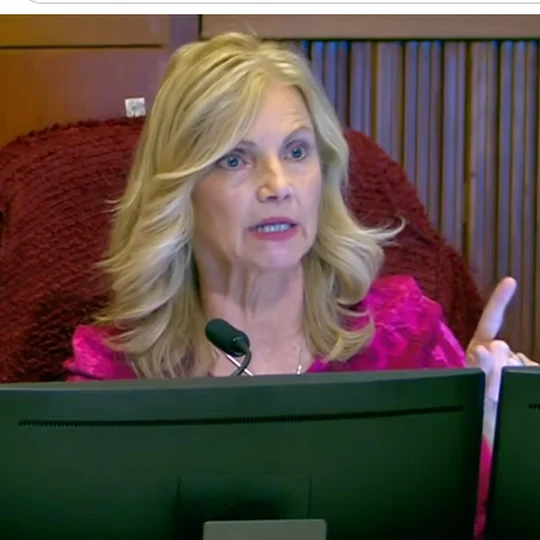
Bergan cast one of five votes against reopening debate and did not bring the proposal back November 9. In a separate discussion she expressed general support for ending data-center incentives and preferred a broader incentive policy. A narrower pause sponsored by the full council was on the November 23 agenda. It would cover much of the city and exempt the pending Trident project.
Our assessment Revisiting future subsidies addresses a different question from pausing new applications. Residents asked for both to receive a hearing.
She opposed the statement mourning lives lost in police shootings.
Bergan joined Hancock and Lawson in voting no on a resolution acknowledging the loss experienced by families after police shootings. The resolution passed.
Our assessment The city could acknowledge families’ pain without deciding any individual case. Ward VI voters deserve to know how their representative voted on that choice.
Bergan argued that Aurora police already observed limits on asking about immigration status and questioned language about legal authority. She voted against the final measure.
Our assessment We see a failure to stand with residents concerned about federal enforcement. The evidence for this judgment is her local vote.
The city’s $17 minimum-wage proposal died on a tie-breaking vote.
Bergan voted against a proposal to raise Aurora’s local wage floor in steps from $12 to $17 by 2025. Workers and business owners testified on both sides. The council rejected the proposal.
Our assessment For a worker paid the minimum, the decision meant there would be no scheduled city raises under this plan. We count that vote against the promise that people who work in Aurora should be able to afford to live here.
The camping ban made an order to move enforceable by arrest.
Bergan voted for the camping ban. The ordinance required shelter to be available. Coffman told council that someone who refused an order to leave a camp could be arrested.
Our assessment Shelter availability was a safeguard. A bed for the night still leaves the person facing the same question the next day: where can I live? We fault the decision to use police enforcement to move people.
Bergan helped remove the expiration date on mandatory jail for retail theft.
Bergan seconded the motion and voted yes. The council adopted ordinance 2024-62 by seven votes to two. In September 2026 a unanimous council repealed municipal mandatory minimums after state Supreme Court decisions limited how cities could punish conduct also covered by state law.
Our assessment A mandatory sentence takes discretion away from the judge hearing the facts. This vote extended that policy beyond its scheduled expiration, and a later council had to revisit it.
Aurora sent other cities a warning about bringing people here.
Bergan backed the resolution. It objected to the organized transport of migrants and unhoused people for temporary shelter without first giving Aurora an opportunity to coordinate. The city attorney said the resolution had no enforcement mechanism.
Our assessment Coordination between cities matters. For a family looking for a room, this council action specified what it wanted neighboring cities to stop doing and offered no place for the family to stay.
A chance to reopen City Hall to speakers failed by one vote.
Bergan voted no on resuming in-person council meetings on August 11. The motion lost 6–5. The public listening session had returned online with 30 minutes, down from the previous 45.
Our assessment Residents could still speak remotely. Those who wanted to look their representatives in the eye, including families pressing for police accountability, still could not do that in the chambers.
A vote against limits on posting suspects’ names and photos.
Bergan voted against the final police communications measure. It restricted identifying people publicly before conviction and allowed an exception for an active threat to public safety. The measure passed.
Our assessment Being named by a police department can affect someone’s job or reputation before a court hears the case. We grade the vote against that protection as a failure.
The city’s human-relations commission faced elimination.
Bergan spoke in support of the case for eliminating the Human Relations Commission, then successfully moved to postpone a decision and consider restructuring. The council ultimately postponed the decision at that meeting.
Our assessment A resident bringing a discrimination concern to City Hall has a stake in whether this commission exists. We fault the effort to close it while commissioners were still answering the accusations.
Bergan proposed putting young people on adult boards in place of a separate Youth Commission. Ruben Medina pointed out that adult boards often meet while students are in school or at activities. The proposal was postponed.
Our assessment A seat on a board has little value to a student who cannot attend. The proposal put a dedicated forum for young people at risk without solving that scheduling problem.
Bergan urged residents to give Chamberlain a chance.
Bergan told speakers who wanted accountability and better training that Chamberlain could deliver both. She then voted for him. Lewis’s wife Anndrec and his mother LaRonda Jones were among the family members at City Hall that evening.
Our assessment We fault the vote to proceed after residents asked for a say in selecting the person who would oversee use of force and officer discipline. The city manager made the selection. Council had the power to withhold confirmation.
Bergan proposed and moved the rule, arguing that groups at the microphone created a safety concern for security officers. The rule generally limited the podium to one person, with exceptions for a guardian accompanying a minor, an interpreter or a person needing disability assistance.
Our assessment Relatives and neighbors had stood together while one person spoke. For someone testifying about a death in the family, an ally at their shoulder matters even when that ally never says a word.